
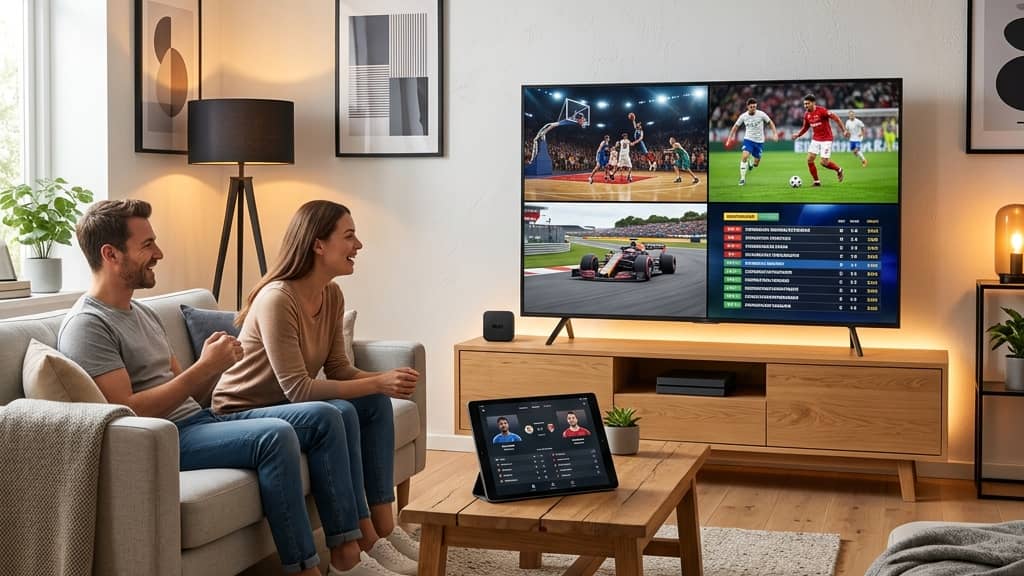
Streaming vs Cable Comparison and Which One Wins in 2026

The Moment Cable Television Lost Its Grip on American Households
For decades, cable television enjoyed an uncontested monopoly over home entertainment. Families signed up with their local cable provider during the initial move-in process, accepted whatever channel bundle was offered, and paid the monthly invoice without seriously considering alternatives. The physical coaxial infrastructure wired directly into every room of the house created a sticky dependency that providers exploited through escalating annual rate increases and punitive early termination penalties.
That era has definitively ended. The streaming vs cable conversation that once felt like a fringe discussion among tech enthusiasts has become the dominant household budgeting debate across every demographic in North America. Younger households that came of age during the smartphone era never signed cable contracts in the first place. Middle-aged families who endured years of creeping rate hikes are canceling in record numbers. Even retirees who once considered cable as essential as running water are discovering that modern streaming devices offer simpler navigation and dramatically lower monthly costs.
In 2026, the question is no longer whether streaming can replace cable. The question is how much money your household is wasting by not making the switch sooner. This comprehensive breakdown examines every measurable dimension of the cable vs streaming debate to help you make a fully informed financial and entertainment decision.
Monthly Cost Breakdown and the Hidden Fees Cable Providers Bury
The most powerful argument in the streaming vs cable comparison begins and ends with your monthly bank statement. Cable providers have perfected the art of advertising aggressively low promotional rates that bear almost no resemblance to the actual long-term charges appearing on billing invoices.
A typical cable promotional offer advertises a complete entertainment package starting at sixty-nine dollars per month. This artificially suppressed introductory rate lasts exactly twelve months before automatically jumping to the standard retail price of one hundred and twenty to one hundred and sixty dollars monthly. Buried beneath the base subscription charge, the invoice reveals a cascade of supplementary fees that no promotional advertisement mentions. Broadcast television surcharges add eight to fifteen dollars monthly. Regional sports network fees append another twelve to twenty dollars. Equipment rental for each physical set-top receiver costs ten to fifteen dollars per box, and most households need at least two receivers. Add federal regulatory recovery fees, franchise fees, and applicable sales taxes, and a family that thought they were paying sixty-nine dollars discovers their actual monthly outflow exceeds one hundred and seventy dollars.
Modern streaming eliminates this entire hidden-fee architecture. Services bill transparently at their advertised rate with zero equipment rental, zero broadcast surcharges, and zero contract commitments. Enterprise IPTV subscriptions delivering tens of thousands of international channels cost between twelve and twenty dollars monthly with complete pricing transparency.
Contract Flexibility and the Freedom to Cancel Without Penalties
One of the most consumer-hostile aspects of traditional cable television is the rigid multi-year contract structure that punishes households for changing their minds. Standard cable agreements lock subscribers into twenty-four-month commitments with early termination fees ranging from one hundred and fifty to four hundred dollars depending on how many months remain in the contract period.
This contract lock creates a perverse dynamic where dissatisfied customers continue paying for a service they dislike simply because the financial penalty for leaving exceeds the cost of enduring several more months of overpriced mediocrity. Cable providers exploit this captive audience dynamic by scheduling their steepest annual rate increases to coincide with the midpoint of active contracts when the termination penalty remains at its maximum deterrent level.
Modern streaming operates on fundamentally different commercial terms. Every major streaming platform and enterprise IPTV provider bills on a month-to-month basis with zero contractual obligations. You can subscribe today, evaluate the service for thirty days, and cancel tomorrow without paying a single penalty dollar. This structural flexibility shifts market power decisively toward the consumer, forcing providers to earn continued loyalty through consistent service quality rather than contractual imprisonment.

Video Quality and Why Cable Compression Degrades Your Picture
Many long-time cable subscribers assume their television picture quality is excellent simply because their provider labels the service as high definition. The technical reality is far less flattering. Legacy cable infrastructure was designed in an era when bandwidth was scarce and expensive, and the fundamental delivery architecture has not evolved to match modern display capabilities.
Cable providers must squeeze hundreds of simultaneous television channels through a single coaxial cable with fixed total bandwidth capacity. To accomplish this feat, every channel undergoes aggressive video compression that strips away fine visual detail, reduces effective color depth, and introduces compression artifacts visible during fast motion sequences. What your cable box labels as 1080i high definition often delivers effective visual resolution closer to 720p after accounting for heavy compression ratios applied at the headend facility.
Streaming platforms and enterprise IPTV operate without these legacy bandwidth constraints. Each video stream travels independently over dedicated internet bandwidth, allowing providers to deliver true uncompressed 1080p at consistent ten to sixteen megabits per second. Premium 4K ultra-high-definition streams arrive at sustained bitrates between twenty-five and forty megabits per second with full dynamic range color, producing picture quality that is physically impossible to achieve over compressed coaxial cable infrastructure.
Live Sports Coverage and Regional Blackout Differences
Live sports remain the single most powerful retention anchor keeping reluctant subscribers tethered to expensive cable packages. Providers understand that passionate fans will tolerate almost any price increase rather than risk missing a crucial playoff game or championship tournament broadcast.
Cable television delivers live sports through licensed regional and national sports network affiliates included within premium tier bundles. However, cable subscribers still face frustrating regional blackout restrictions that prevent viewing of locally televised games on competing national broadcasts. Furthermore, cable sports coverage is limited exclusively to domestic network contracts. International leagues, overseas tournament broadcasts, and foreign-language sports commentary feeds are almost entirely absent from standard cable channel lineups.
Enterprise IPTV demolishes these artificial boundaries by aggregating raw satellite feeds from international broadcasters worldwide. Subscribers access every domestic sports channel alongside thousands of international sports feeds covering European football leagues, South American tournaments, Asian championship events, and Australian sporting competitions. Regional blackout restrictions that plague domestic cable subscribers simply do not exist when tuning into the corresponding international broadcast feed of the exact same event.
DVR Recording and On Demand Library Comparison
The ability to record and time-shift live television has been a cornerstone of the cable value proposition since the introduction of digital video recorders two decades ago. Cable providers lease physical DVR hardware that records live broadcasts to an internal hard drive, allowing subscribers to pause, rewind, and fast-forward through recorded content at their convenience.
However, cable DVR technology carries significant limitations that modern alternatives have long since surpassed. Physical DVR hard drives offer finite storage capacity, typically allowing only one hundred to two hundred hours of standard definition recording. Recording multiple simultaneous channels requires expensive multi-tuner receiver upgrades. If the DVR hardware fails or the subscriber switches providers, all recorded content is permanently lost.
Mainstream streaming platforms provide cloud-based DVR functionality with unlimited recording capacity that eliminates physical hardware constraints entirely. Enterprise IPTV takes the concept further with automated rolling catch-up servers that continuously archive the previous seventy-two to ninety-six hours of programming across all major channels. Subscribers never need to manually schedule recordings because the infrastructure automatically preserves everything that aired during the previous three to four days, accessible instantly through the electronic program guide with full playback controls.

Step by Step Transition Plan for Cutting Your Cable Subscription
Making the transition from cable to a streaming-based entertainment setup is far simpler than most long-time cable subscribers anticipate. The entire process can be completed in a single afternoon with minimal technical expertise.
- Step 1 Audit Your Household Viewing Habits
- Before canceling anything, document which channels your household actually watches on a regular weekly basis. Most families discover they routinely view fewer than fifteen channels out of the hundreds included in their cable bundle. Identify your essential local stations, sports channels, news networks, and entertainment favorites.
- Step 2 Secure a Reliable Broadband Internet Connection
- Verify that your home internet plan delivers at least fifty megabits per second of downstream bandwidth. Contact your internet provider to confirm that canceling cable television will not trigger a significant increase in standalone internet pricing.
- Step 3 Purchase Compact Streaming Hardware
- Invest in a modern quad-core streaming stick or dedicated set-top streaming box for each primary television in your home. Avoid relying on outdated built-in smart television software that lacks processing power for high-bitrate video decoding.
- Step 4 Install a Digital Over the Air Antenna
- Connect a digital antenna to capture free local broadcast channels in uncompressed high definition. This eliminates any need to pay for streaming services just to access local news and network primetime entertainment.
- Step 5 Subscribe to Targeted Entertainment Services
- Rather than recreating the bloated cable bundle digitally, subscribe only to the specific services that carry the content your household actively watches. Supplement with an enterprise IPTV subscription for comprehensive sports and international channel coverage at a fraction of legacy pricing.
The Final Verdict on Whether Streaming Truly Replaces Cable
After examining every dimension of the cable vs streaming comparison, the conclusion is unambiguous for the vast majority of modern households. Traditional cable television in 2026 represents a legacy technology propped up by long-term contractual inertia rather than genuine consumer value. The combination of escalating hidden fees, compressed video quality, rigid multi-year contracts, limited channel customization, and outdated physical hardware creates an entertainment experience that is objectively inferior to what modern streaming technology delivers.
Streaming platforms provide transparent month-to-month pricing, superior native video resolution, unlimited cloud recording, and the flexibility to add or remove services instantly based on seasonal viewing preferences. Enterprise IPTV pushes the advantage even further by delivering tens of thousands of global channels, unrestricted international sports coverage, automated catch-up archives, and customizable multi-screen viewing for less than twenty dollars monthly.
The only scenario where cable retains a marginal advantage is in extremely rural locations where broadband internet infrastructure delivers insufficient bandwidth for reliable video streaming. For every other household with access to stable twenty-five-megabit-or-faster internet service, the streaming vs cable debate has a definitive answer. Cancel the contract, return the equipment, and redirect those savings toward the entertainment experiences that genuinely matter to your family.
Frequently Asked Questions
Ready to get started?
Try our service risk-free with a 24-hour free trial.
Related Articles
How to Get an IPTV Subscription: Your Complete Guide
Learn how to get your IPTV subscription quickly.
How to Add a Playlist on IPTV: Step-by-Step Guide
Step-by-step guide to adding IPTV playlists.
Is Indian IPTV Legal in the USA? Explore the Details!
Get informed about Indian IPTV legality in the USA.