
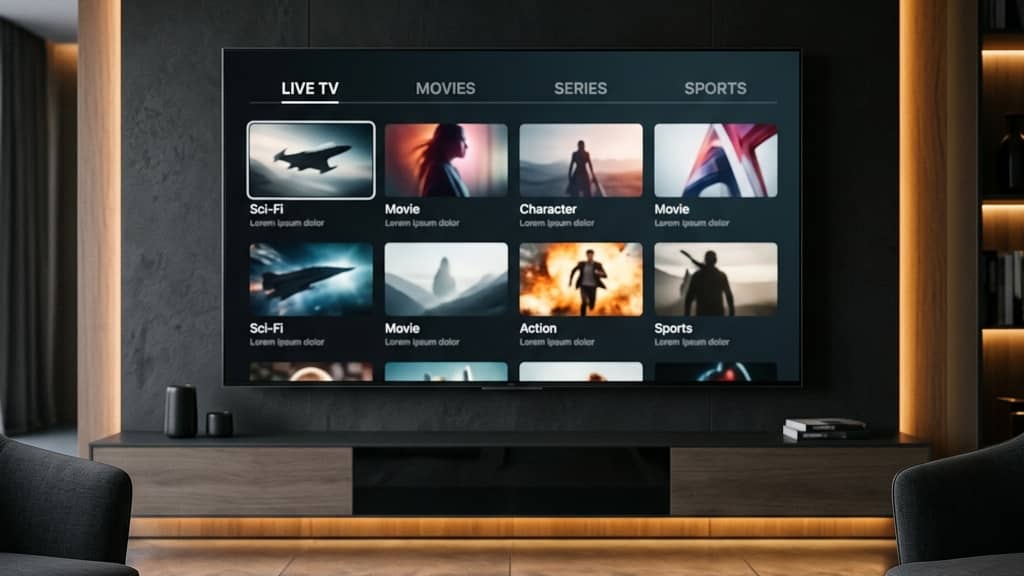
Best Live TV Services in 2026 for Sports Fans and Cord Cutters

The State of Live Television Streaming in 2026
When millions of households first cut the cord a decade ago, the promise was simple and compelling. Discard the bulky plastic cable box, eliminate the predatory rental fees, and enjoy flexible, low-cost television delivered over high-speed internet. For a few brief years, streaming felt like an unequivocal consumer victory. You could assemble a tailored entertainment suite for a fraction of what legacy telecom monopolies demanded.
Today, the economics of mainstream streaming have flipped on their head. The dominant cable replacement platforms have steadily inflated their monthly subscription fees, tacking on regional sports surcharges, broadcast distribution fees, and mandatory bundle tiers until their pricing rivals the very cable bills people fought so hard to escape. Paying ninety dollars a month for a digital package that still limits your screen allowances and subjects you to local market blackouts is not the cord-cutting future anyone envisioned.
Yet walking away from live television entirely is not an option for dedicated sports fans, breaking news followers, or households that thrive on the shared energy of live linear broadcasts. In this comprehensive industry evaluation, we examine the best live tv services 2026 has to offer, breaking down the practical differences between mainstream digital cable replacements, free ad-supported networks, and enterprise-grade IPTV infrastructure capable of handling high-octane weekend sports without dropping a single frame.
Why Mainstream Cable Replacement Apps Cost So Much Today
To understand why the digital live TV market feels increasingly bloated, you must look at how traditional broadcast distribution contracts are negotiated. Mainstream streaming platforms do not merely pay for the channels people actually watch. Media conglomerates enforce carriage contracts that force distributors to purchase bloated bundles of auxiliary networks to secure access to essential live sports channels.
Every time a multi-billion-dollar sports broadcast contract renews, those ballooning licensing costs get passed squarely down to the end consumer. As a result, standard entry-level packages on mainstream platforms now hover between 75 and 95 USD per calendar month. When you calculate that annual outlay alongside high-speed home fiber service, cord-cutters find themselves spending over two thousand dollars annually just to watch their favorite weekend matches and evening news.
Furthermore, these mainstream services impose aggressive concurrent stream restrictions. Most standard tiers limit outside-the-home viewing to a single mobile screen, meaning family members traveling or attending college cannot share the household subscription without triggering continuous device authentication lockouts.
Understanding FAST Channels and What Free Streaming Delivers
At the polar opposite end of the pricing spectrum sits the explosive emergence of FAST channels. If you have explored the built-in operating menus of modern smart televisions or digital streaming media sticks, you have undoubtedly encountered these free digital feeds.
The fast channel meaning represents Free Ad-Supported Streaming Television. Unlike traditional on-demand free catalogs where you manually select a specific movie title, FAST platforms replicate the linear broadcast television experience. You launch the application, view an electronic program guide divided by genre, select a channel, and immediately join a continuous live video stream. You never enter credit card information or register an account profile.
For casual entertainment, true crime marathons, classic sitcom syndication, and continuous global headline news, FAST platforms provide tremendous utility. However, for serious sports enthusiasts, the limitations become apparent within minutes. Free linear platforms rarely possess the financial capital to license live top-tier professional sporting events. Their sports offerings consist primarily of archived match replays, round-table debate shows, niche combat highlights, and minor secondary leagues. While excellent as an auxiliary background entertainment tool, FAST channels cannot replace a true live sports broadcast hub.
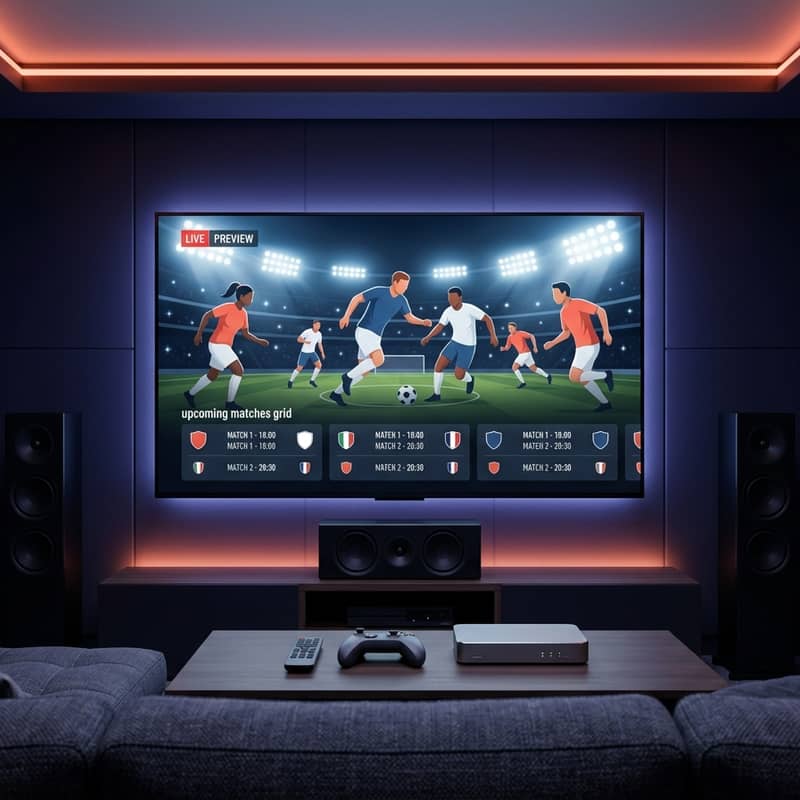
Why Serious Sports Fans Are Moving to High Capacity IPTV
Faced with ninety-dollar cable replacement apps on one side and sports-barren free platforms on the other, millions of sports enthusiasts and international households have transitioned to private, high-capacity IPTV platforms. The value proposition is mathematically undeniable.
A premier IPTV infrastructure delivers between 18,000 and 25,000 live broadcast channels covering every continent, every major regional sports network, dedicated international tournament feeds, and full-resolution pay-per-view events for between 12 and 20 USD per month. Because these high-performance server farms capture raw satellite and terrestrial feeds across dozens of global jurisdictions, regional blackout protocols are completely circumvented.
Whether you follow high-tier European soccer tournaments, international test cricket tours, championship boxing bouts, or top-flight North American basketball and football, an enterprise IPTV line provides uninterrupted coverage. You simply tune into the corresponding international feed without worrying whether your local telecom provider negotiated an exclusive broadcast blackout in your postal code.
Technical Benchmarks That Define True High Definition Sports
Not all streaming video packets are created equal. When evaluating live tv streaming services, marketing claims regarding high definition or 4K resolution mean nothing without inspecting the underlying video encoding parameters. In live sports broadcasting, frame rate and sustained bitrate matter infinitely more than raw pixel count.
Standard broadcast movies look perfectly natural running at 24 frames per second because cinematic motion blur is expected. In fast-paced sports, a soccer ball traveling at eighty miles per hour across a wide-angle pitch, a speeding motorsport vehicle drifting through a corner, or a rapid boxing exchange becomes a smeared, juddering mess at 24 or 30 frames per second. The best live tv streaming infrastructure delivers full 60 frames per second across every major sports feed.
Equally critical is video compression bitrate. A compressed 1080p stream choked down to 3 Mbps looks blurry, pixelated, and washed out during fast camera pans. Premium sports streams operate at unconstrained bitrates between 8 and 18 Mbps for 1080p, and up to 35 Mbps for native 4K feeds. This delivers razor-sharp field lines, vibrant stadium illumination, and crisp grass textures that reveal the true graphical potential of modern OLED and Mini-LED displays.
The Power of Multi Screen Viewing for Weekend Match Days
One of the most revolutionary advantages of pairing a top-tier IPTV subscription with advanced media players is the ability to unlock simultaneous multi-screen broadcasting on a single living room display. Traditional cable set-top boxes can only decode one video stream at a time, forcing you to flip back and forth between simultaneous games and invariably missing the critical game-winning play.
Modern multi-core streaming hardware like the Fire TV Stick 4K Max, Apple TV 4K, and high-end Android TV boxes possess sufficient hardware video decoders to process multiple parallel video streams concurrently. Utilizing advanced IPTV software, you can partition your television screen into dual split-screen, triple-panel, or classic four-way grid layouts.
Imagine watching two premier European football matches side by side while monitoring an international cricket test and a regional championship basketball game in the lower quadrants, all running in fluid real time. With multi-screen support, your living room transforms into a professional sports bar command center, controlled effortlessly through your standard physical remote.
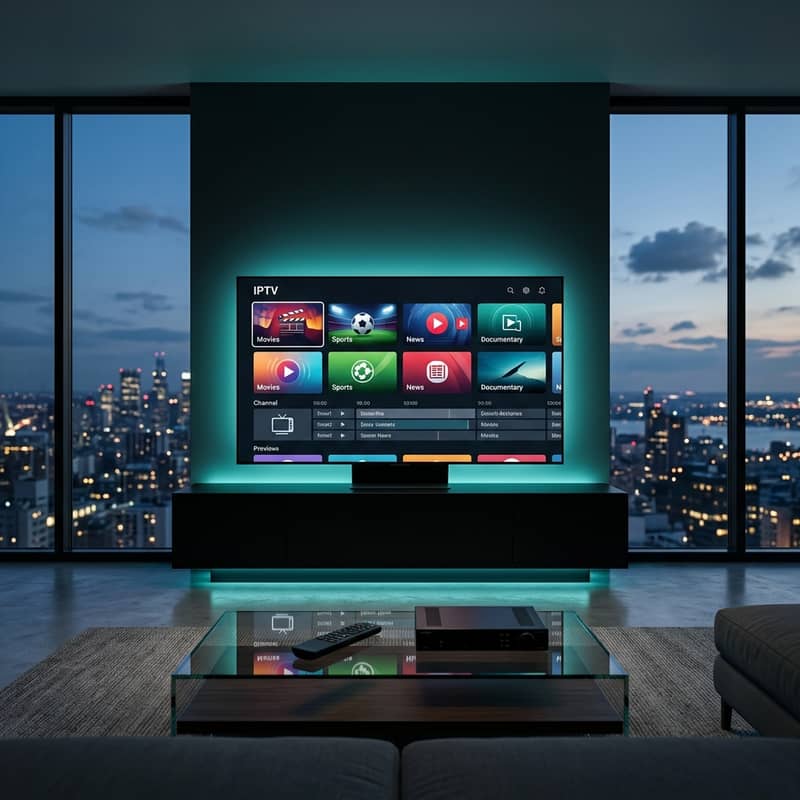
Evaluating Stream Stability During Massive Global Broadcasts
The ultimate stress test for any live television platform occurs on major championship weekends. When tens of millions of viewers tune in simultaneously for a world title fight or a continental soccer cup final, consumer video delivery networks face astronomical bandwidth surges.
Mediocre streaming providers that cut corners on server hosting quickly buckle under this immense concurrent load. Video players drop into endless buffering loops, audio tracks lose synchronization with video frames, and servers collapse entirely right as the final round or match-deciding penalty shootout begins. This is why evaluating real-world server architecture matters far more than counting the total number of channels listed on a website.
Enterprise-grade providers maintain multi-tiered server topologies backed by intelligent load-balancing directors. Incoming subscriber traffic is dynamically distributed across high-capacity edge caching nodes positioned near primary consumer internet exchange points. If an individual transmission line experiences localized transit congestion, the load-balancing controller seamlessly redirects your media stream to an alternate server node without interrupting playback on your screen.
How to Choose the Ideal Live TV Platform for Your Needs
Selecting the right live television platform comes down to conducting an honest audit of your household viewing priorities, technical comfort level, and budget expectations.
- Step 1 Assess Your Essential Channel Inventory
- List the specific sports leagues, regional networks, and international broadcast feeds your household watches weekly. Do not pay for a bloated ninety-dollar package if eighty percent of your viewing centers around three specific sports channels.
- Step 2 Evaluate Your Hardware Ecosystem
- Determine which devices will host your video streams. If you rely entirely on native smart television operating systems, verify which applications are natively supported. If you run external streaming sticks, you enjoy vastly superior software flexibility and multi-screen capabilities.
- Step 3 Verify Peak-Hour Performance with a Trial
- Never commit to any platform without executing a real-world stress test between 7 PM and 11 PM on a weekend evening. Monitor video fluidity, audio synchronization, and channel zapping responsiveness.
- Step 4 Audit Customer Support Availability
- Confirm whether the provider maintains real-time technical support through live chat or direct messaging. If an unexpected broadcast configuration issue arises minutes before kickoff, having access to an active technician ensures you never miss a match.
Final Recommendations for Building the Ultimate Streaming Rig
Live television in 2026 offers more freedom, variety, and technological sophistication than at any prior point in broadcast history. You no longer need to accept exorbitant multi-year cable contracts, predatory regional sports surcharges, or arbitrary broadcast blackouts just to follow the teams and entertainment you love.
By pairing a powerful, modern streaming device with an enterprise-grade IPTV subscription, you unlock tens of thousands of crystal-clear live channels, comprehensive multi-screen sports coverage, and complete global flexibility at a fraction of traditional entertainment costs.
For deeper technical insights into optimizing your streaming hardware, explore our detailed guide on the best live TV streaming apps for modern devices, or read our breakdown on how to watch live sports on IPTV without buffering and our comparative analysis of free sports streaming sites versus private IPTV servers.
Ready to upgrade your home entertainment experience to a rock-solid, multi-screen live sports streaming hub? Connect with our dedicated technical specialists through our 24/7 live support desk to request your personalized setup walkthrough, explore our complete global channel lineup, and discover our transparent, contract-free subscription pricing plans today. Experience smooth 60fps broadcasts, multi-room flexibility, and true television independence.
Frequently Asked Questions
Ready to get started?
Try our service risk-free with a 24-hour free trial.
Related Articles
Discover the Best IPTV Service Providers for 2026
Uncover top IPTV service providers for seamless streaming.
HDMI to IPTV Converter Guide and How to Encode Any Video Source for IP Streaming
A technical guide to HDMI encoder hardware that converts any HDMI video source into IP streams for distribution over local networks or the internet covering hardware specifications and encoding settings and deployment architectures.
What is SmartOne IPTV? Discover Its Features and Benefits
Explore the features and benefits of SmartOne IPTV.