
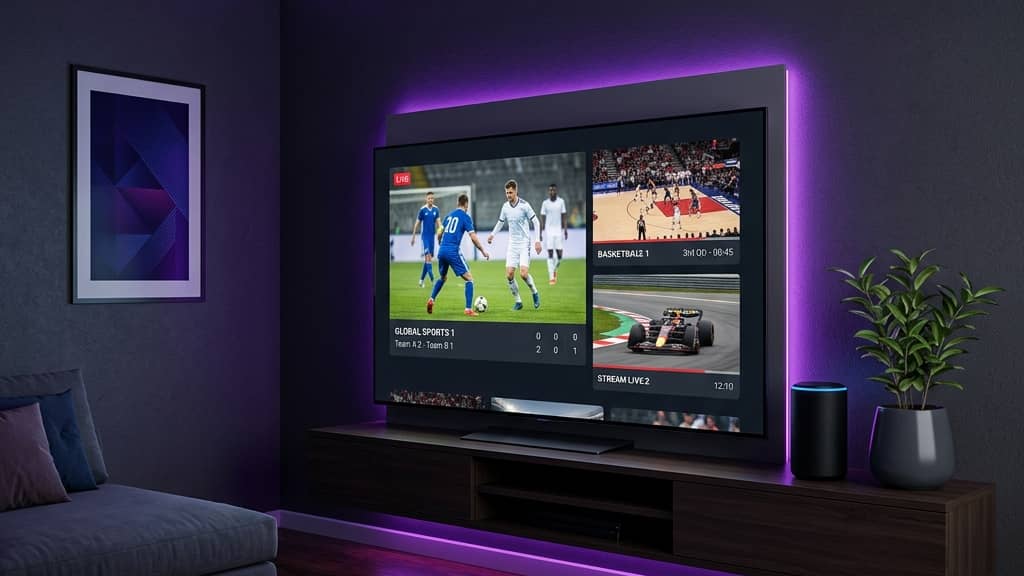
Fubo vs YouTube TV vs IPTV The Ultimate Sports Streaming Comparison 2026

The State of Live Television and Sports Streaming in 2026
Cord-cutting was originally envisioned as the ultimate liberation from bloated cable television bills. A decade ago, ditching physical coaxial set-top boxes in favor of flexible digital apps promised lower monthly costs, transparent billing, and effortless access to live entertainment. Today, that promise has largely dissolved into a fragmented landscape dominated by massive monthly rate increases, mandatory regional broadcasting surcharges, and confusing package tiers.
For passionate sports fans, the situation is particularly aggravating. Live sporting events remain the primary anchor keeping households tied to live television, yet watching an entire season of professional football, basketball, baseball, hockey, and international soccer now requires juggling multiple overlapping services. Every time corporate media conglomerates renegotiate distribution agreements, consumers absorb another ten to fifteen percent price hike.
This growing frustration has ignited an intense evaluation of available cord-cutting options. Viewers routinely find themselves analyzing fubo vs youtube tv to determine which mainstream platform balances channel selection with rising costs. At the same time, millions of savvy cord-cutters are looking beyond corporate streaming bundles entirely, discovering that enterprise IPTV delivers unprecedented global sports coverage, native multi-screen capabilities, and massive financial savings.
Comparing Monthly Subscription Costs and Hidden Surcharges
When comparing fubo vs youtube tv price structures in 2026, the initial figures advertised on promotional landing pages tell only half the story. Mainstream live streaming giants have steadily adopted the exact pricing mechanics that made traditional cable bundles so unpopular.
A base subscription to mainstream live platforms now ranges from seventy-nine to eighty-five dollars per month. However, sports enthusiasts quickly discover additional mandatory fees. One major platform automatically appends a regional sports network surcharge of up to fourteen dollars per month depending on your postal code, pushing the actual out-of-pocket expense well past ninety-five dollars before adding taxes. When you contrast fubo vs sling or youtube tv vs sling, budget services appear cheaper on the surface, but their stripped-down forty-dollar tiers omit dozens of essential sports channels, forcing users to buy supplementary sports packs that negate any real cost advantage.
In contrast, enterprise IPTV completely reinvents the economic equation. Rather than paying eighty to one hundred dollars every single month for a limited domestic channel lineup, an elite IPTV subscription averages between twelve and eighteen dollars per month. There are no regional surcharges, no hardware leasing fees, and zero annual contract locks. Over the course of a single year, a sports fan switching from corporate bundles to modern IPTV saves between eight hundred and one thousand dollars while accessing exponentially more live programming.
Channel Lineups and Regional Sports Coverage Breakdown
Evaluating the channel lineup in fubo vs hulu or reviewing the hulu vs youtube tv channel list reveals substantial differences in how platforms treat regional sports networks. Regional networks are essential for watching hometown baseball, basketball, and hockey franchises throughout grueling regular season schedules.
Mainstream live services have repeatedly dropped regional sports networks during contentious contract disputes, leaving fans unable to watch local team broadcasts without purchasing expensive standalone direct-to-consumer team apps. While some sports-centric platforms still carry regional channels, they penalize subscribers with mandatory regional broadcast fees regardless of whether the household actually watches those specific teams. When researching fubo vs directv stream or youtube tv vs directv stream, viewers often find themselves trapped between missing local channels or paying luxury prices exceeding one hundred dollars monthly.
Enterprise IPTV eliminates channel blackouts by providing unified access to every regional sports network across North America, Europe, the United Kingdom, and Australia. If your local team is playing on a regional affiliate hundreds of miles away, or if a premier soccer derby is airing exclusively on an international satellite feed, IPTV delivers the raw transmission seamlessly. Subscribers enjoy complete coverage of collegiate athletics, regional minor leagues, and premier international tournaments in one unified channel interface.
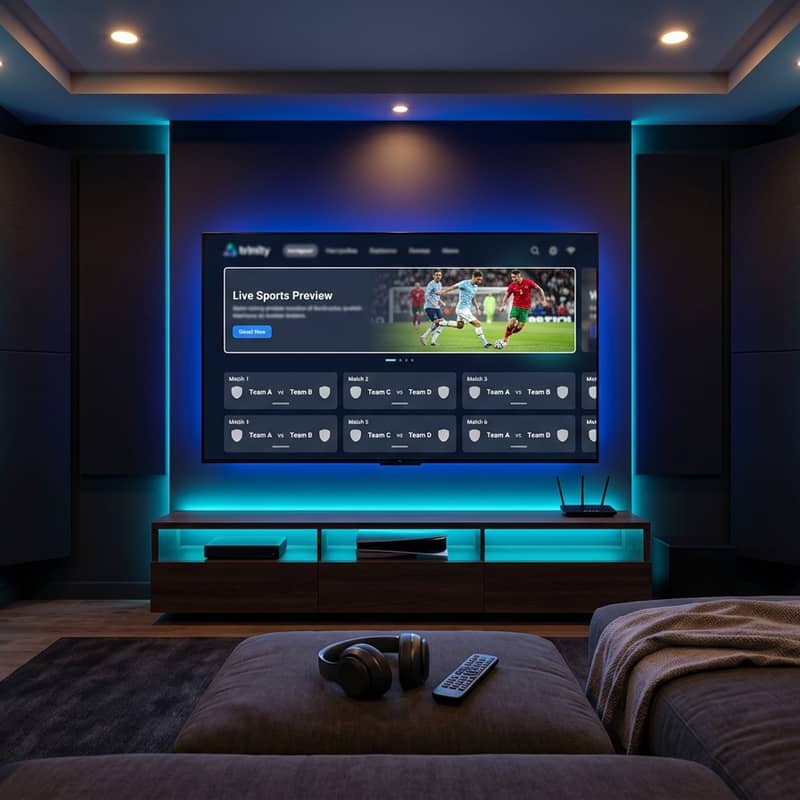
Video Quality and True 4K Sports Broadcasting Reality
Picture clarity and motion fluidity are non-negotiable for live sports viewing. Fast-moving football passes, high-speed hockey pucks, and rapid tennis volleys demand high bitrates and consistent sixty-frame-per-second refresh rates. Watching high-stakes action on an underpowered stream plagued by motion blur or pixelation ruins the entire viewing experience.
Mainstream streaming services compress video streams aggressively to conserve server bandwidth across millions of concurrent users. Standard high-definition feeds on mainstream apps often run at modest bitrates between four and eight megabits per second. Furthermore, true 4K ultra-high-definition sports broadcasts remain an elusive luxury. Mainstream platforms typically lock 4K streams behind supplementary monthly add-ons, and even then, native 4K broadcasts are limited to a handful of marquee events each month.
A premium IPTV provider engineered for sports performance operates dedicated high-throughput content delivery networks. High-definition channels maintain uncompressed bitrates between ten and sixteen megabits per second with silky-smooth sixty-frame rendering. Moreover, dedicated 4K sports feeds stream at sustained bitrates between twenty-five and forty megabits per second without supplemental charges. The result is razor-sharp turf detail, crystal-clear jersey lettering, and fluid motion tracking that rivals direct stadium satellite downlinks.
Simultaneous Device Streams and Multi Screen Capabilities
Modern households rarely gather around a single television screen to watch one program. On packed weekend sports schedules, one family member might follow a high-stakes football clash in the living room, another watches collegiate basketball in the den, while someone else catches an international soccer match on a mobile tablet.
Mainstream corporate services enforce rigid simultaneous stream policies designed to discourage account sharing. While some allow up to ten streams within your designated home network, they enforce severe restrictions as soon as a family member leaves the primary residence. Attempting to stream on a mobile device while traveling or at a vacation home routinely triggers account lockout warnings or stream cap errors. When comparing fubo vs hulu live, expanding stream capacity often demands expensive supplemental tier upgrades.
Enterprise IPTV delivers flexible multi-connection packages that operate anywhere in the world without artificial geographic restrictions. Furthermore, when paired with capable modern video player applications, IPTV unlocks true client-side multi-viewing. Rather than relying on rigid, pre-selected quad-box layouts generated by corporate control rooms, sports fans can configure their own custom multi-view grids, watching up to four or nine distinct live matches simultaneously on a single screen with instantaneous audio switching.
Cloud DVR Storage versus Instant Archive Playback
Recording live programming has evolved significantly since the days of noisy mechanical hard drives inside bulky cable set-top boxes. Today, cloud-based digital video recording is a primary selling point for mainstream cord-cutting platforms.
Mainstream services generally offer unlimited cloud DVR storage, allowing users to record entire sports leagues with a single click. However, these recordings come with important caveats. Mainstream platforms frequently enforce automated expiration policies, deleting saved broadcasts after nine months. In some instances, recorded content is dynamically replaced by on-demand versions with forced commercial interruptions that prevent viewers from fast-forwarding through promotional breaks.
Enterprise IPTV handles archived content through high-capacity rolling catch-up TV servers. Instead of manually scheduling recordings ahead of time, the server infrastructure automatically archives the previous seventy-two to ninety-six hours of programming across all major sports and entertainment networks. If you miss kickoff due to family obligations or traffic delays, you simply open the electronic program guide, navigate backward in time, and start the broadcast from the opening whistle with full pause, rewind, and fast-forward functionality.

Step by Step Evaluation Checklist for Cord Cutters
Transitioning from overpriced traditional bundles to an optimized digital sports setup requires systematic evaluation to ensure long-term satisfaction and flawless performance.
- Step 1 Audit Your Household Channel Needs
- Compile a comprehensive inventory of the sports leagues, regional franchises, and entertainment networks your family watches regularly throughout the calendar year. Identify which broadcasts require regional affiliate access and which air on national or international feeds.
- Step 2 Test Internet Bandwidth and Stability
- Verify that your home broadband connection delivers sustained downstream bandwidth capable of handling simultaneous high-bitrate video streams. While a single 1080p stream requires ten to fifteen megabits per second, running multi-view sports grids requires thirty to fifty megabits of stable throughput.
- Step 3 Select High Performance Streaming Hardware
- Equip your primary television display with a capable standalone streaming media stick or dedicated set-top box. Avoid relying on sluggish integrated smart television operating systems that struggle with high-bitrate decoding and multi-channel memory caching.
- Step 4 Install a Professional Media Player
- Download a certified, open-standard video player application from your device app marketplace. Professional players offer superior channel management, customizable electronic program guides, and seamless multi-view grid rendering.
- Step 5 Authenticate via Database API Credentials
- Authenticate your subscription using Xtream Codes API database integration rather than static playlist files. Direct server authentication guarantees that your sports schedule listings, category updates, and electronic program guides refresh automatically before matchday kickoffs.
Internet Bandwidth Requirements for Multi Stream Sports
Flawless sports streaming demands more than just nominal raw download speeds advertised on your monthly broadband invoice. Network stability, packet latency, and local wireless interference play decisive roles in stream consistency during live tournament broadcasts.
When running a single high-definition sports feed at sixty frames per second, your streaming device consumes approximately ten to twelve megabits per second of continuous data. If you upgrade to an uncompressed 4K ultra-high-definition feed, that requirement jumps to twenty-five to thirty-five megabits per second. However, for households utilizing multi-screen functionality to track multiple games simultaneously, bandwidth consumption scales linearly. A four-channel multi-view grid requires forty to fifty megabits of uninterrupted throughput.
To prevent buffer bloat and packet drops during intense match moments, connect high-traffic streaming hardware via physical Ethernet cabling whenever feasible. If using wireless connections, position your hardware on a dedicated five-gigahertz Wi-Fi frequency band close to your primary router, and reconfigure your router domain name system to fast public resolvers such as Cloudflare or Google to minimize connection handshake delays.
Final Verdict on Which Streaming Model Wins for Sports Fans
When examining fubo vs youtube tv or evaluating mainstream live alternatives against modern IPTV, the decisive factor ultimately centers on freedom, coverage, and financial value. Mainstream corporate platforms provide polished, plug-and-play experiences for casual viewers who watch occasional broadcasts and do not mind paying eighty to one hundred dollars each month. However, for true sports enthusiasts who demand comprehensive regional coverage, international football, collegiate athletics, and unrestricted multi-screen viewing, mainstream bundles fall short.
Enterprise IPTV delivers an unmatched viewing experience tailored directly to the demands of passionate fans. By combining tens of thousands of live international channels, complete regional sports access, uncompressed sixty-frame video feeds, and customizable multi-view capabilities for less than twenty dollars per month, IPTV represents the future of live sports entertainment.
Investing in reliable streaming hardware, pairing it with an enterprise-grade service, and configuring your home network properly unlocks the ultimate sports command center. Say goodbye to arbitrary blackout messages, escalating monthly subscription bills, and restrictive stream limits, and enjoy every live goal, touchdown, and championship moment exactly as it was meant to be seen.
Frequently Asked Questions
Ready to get started?
Try our service risk-free with a 24-hour free trial.
Related Articles
Unlocking LexonStream IPTV: Your Comprehensive Guide
Explore the ultimate guide to LexonStream IPTV streaming.
The Ultimate Guide to Buy IPTV Subscriptions in 2026
Learn how to buy IPTV subscriptions and optimize your streaming.
The Complete Guide to IPTV Encoder HDMI for 2026
Learn how to use IPTV encoder HDMI effectively.