Watch Live Events Online and How to Stream Sports Without Buffering in 2026

The Desperate Search for Free Live Sports Streaming and Why It Fails
Every weekend, millions of passionate sports fans across the globe open their web browsers and begin the same frustrating ritual. They type desperate search queries looking for free ways to stream live sporting events that corporate broadcasting conglomerates have locked behind increasingly expensive subscription paywalls. The searches intensify during championship weekends, playoff tournaments, and high-stakes rivalry matches when the emotional desire to watch live exceeds the financial willingness to pay for yet another fragmented streaming subscription.
This weekly search ritual has spawned an entire ecosystem of unverified free streaming websites that promise instant access to every live sporting event imaginable. These sites typically present a cluttered interface filled with aggressive banner advertisements surrounding a central video player that may or may not actually load the requested stream. Before the viewer reaches the video, they navigate through multiple layers of pop-up windows, countdown timers, and redirect pages designed to generate advertising revenue and install tracking software.
The fundamental problem is that every one of these unverified platforms operates without the server infrastructure, bandwidth allocation, or content delivery engineering required to sustain reliable live video transmission to thousands of concurrent viewers. The streams work intermittently during low-demand periods, but collapse catastrophically during the exact moments viewers care about most: championship finals, overtime periods, and decisive playoff elimination matches.
The Hidden Security Risks Behind Unverified Free Streaming Websites
Beyond the frustrating reliability problems, unverified free streaming sites expose visitors to genuine cybersecurity threats that extend far beyond the temporary annoyance of a buffering video player. Understanding these risks is essential for protecting your personal devices and private data.
The advertising networks that fund these operations accept ad inventory from virtually any buyer without content quality screening. This unfiltered advertising pipeline routinely delivers malicious scripts disguised as legitimate commercial banners. Clicking anywhere on the page, including the seemingly innocent close button on a pop-up window, can trigger drive-by download attacks that install browser hijacking extensions, cryptocurrency mining scripts, or keystroke logging software onto your device without visible indication.
Many free streaming sites also employ aggressive fingerprinting techniques that harvest detailed information about your device hardware, browser configuration, installed software, geographic location, and browsing history. This fingerprint data is compiled into profiles sold to data aggregation brokers on secondary markets. Your device identity, browsing habits, and approximate physical location become commercial products traded without your knowledge or consent.
The security calculus is straightforward. Saving a few dollars by using unverified streaming sources risks exposing your personal devices, financial accounts, and private data to threats whose potential cost dwarfs any subscription savings. The economically rational alternative is investing in a secure, professional streaming solution that delivers reliable live coverage without the security compromises.
Why Live Sports Broadcasting Rights Are So Fragmented and Expensive
To understand why so many fans resort to searching for free alternatives, you must examine the structural forces that have made legitimate live sports access prohibitively expensive and maddeningly fragmented across competing platforms.
Professional sports broadcasting rights represent the single most valuable content category in the entertainment industry. Corporate media conglomerates compete aggressively in multi-billion-dollar bidding wars to secure exclusive transmission rights for major leagues, tournaments, and championship events. These astronomical licensing costs are passed directly to consumers through escalating subscription rates and mandatory sports tier surcharges.
Making matters worse, no single platform holds broadcasting rights for every sport or every league. A dedicated fan following professional football, basketball, hockey, international soccer, combat sports, motorsport, and tennis must subscribe to four or five separate streaming services, each commanding monthly fees between fifteen and eighty dollars. The combined cost of comprehensive sports coverage through legitimate mainstream platforms easily exceeds one hundred and fifty dollars monthly, approaching or exceeding the legacy cable pricing that drove cord-cutting adoption in the first place.
This structural fragmentation creates the exact frustration that pushes millions of viewers toward risky free alternatives. Fans are not inherently unwilling to pay for live sports. They are unwilling to pay one hundred and fifty dollars monthly across five separate services just to follow the sporting landscape they love.
How Enterprise IPTV Solves the Fragmentation and Reliability Problem
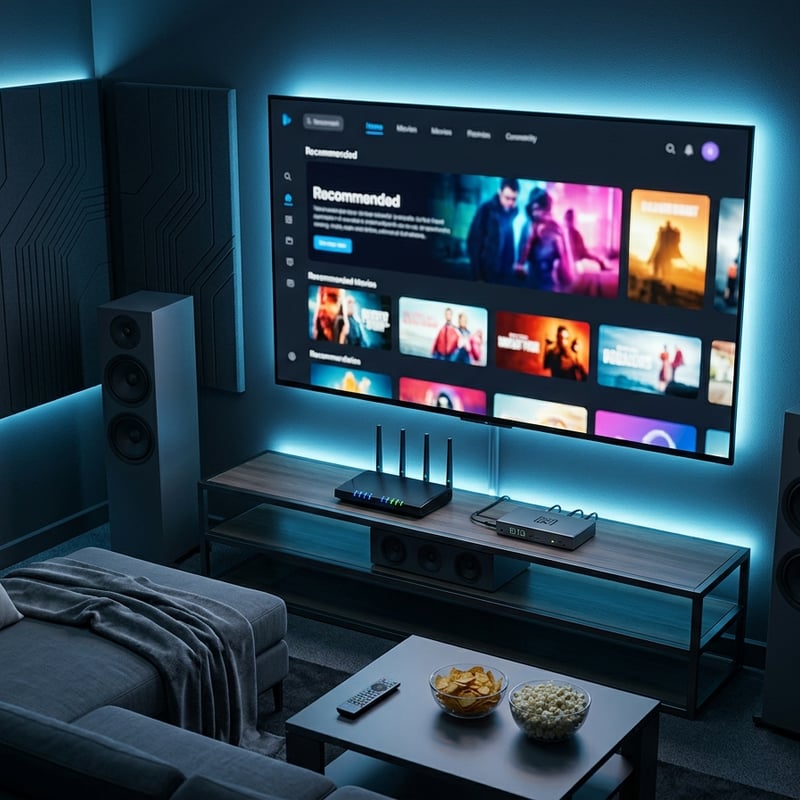
Enterprise IPTV infrastructure addresses both the financial absurdity and the technical unreliability of the current live sports streaming landscape through a fundamentally different content delivery architecture. Rather than purchasing fragmented domestic broadcasting subscriptions from multiple competing corporate platforms, subscribers access a unified channel interface aggregating raw satellite feeds from broadcasters worldwide.
A single enterprise subscription delivers comprehensive access to hundreds of dedicated sports channels spanning domestic and international networks from North America, Europe, the United Kingdom, Asia, South America, and Oceania. Every major league, tournament, championship, and qualifying event is covered through corresponding international broadcast feeds, eliminating the need to maintain multiple overlapping platform subscriptions.
The technical infrastructure behind professional IPTV eliminates the reliability failures that plague free streaming alternatives. Dedicated high-throughput content delivery servers maintain pre-provisioned bandwidth reserves specifically engineered for peak concurrent viewership surges during championship events. While free sites crash under load and mainstream platforms occasionally throttle quality during peak demand, enterprise IPTV servers sustain full-bitrate high-definition delivery to every connected subscriber simultaneously.
Technical Requirements for Buffer Free Live Event Streaming
Achieving genuinely buffer-free live sports streaming requires understanding the relationship between your home internet bandwidth, streaming device capabilities, and network configuration. Even the most reliable streaming source cannot deliver smooth playback if the receiving end of the connection introduces bottlenecks.
Live sports broadcasting demands significantly higher sustained bandwidth than pre-recorded on-demand content. On-demand movies and series benefit from adaptive bitrate streaming that pre-buffers content several seconds ahead of playback, masking momentary network fluctuations from the viewer. Live broadcasts cannot employ aggressive pre-buffering because the content is generated in real time. Every packet must arrive within a narrow latency window to maintain fluid video and synchronized audio. Any sustained bandwidth dip below the stream bitrate requirement produces immediate visible buffering.
For standard high-definition live sports at sixty frames per second, maintain at least fifteen megabits per second of sustained downstream bandwidth with less than fifty milliseconds of network latency. For 4K ultra-high-definition live feeds, target thirty to fifty megabits per second of uninterrupted throughput. Connect your primary streaming device via wired Ethernet whenever possible, and configure your router DNS to high-performance public resolvers to minimize connection handshake delays that accumulate into perceptible channel switching latency.
Choosing the Right Hardware for Reliable Live Event Playback
The streaming device connected to your television plays a decisive role in determining whether live events render smoothly or stutter through critical moments. Live sports impose the most demanding workload on consumer streaming hardware because every frame matters and any processing delay becomes immediately visible as motion judder or audio desynchronization.
Budget streaming hardware with underpowered processors and limited system memory handles pre-recorded content acceptably but struggles under the sustained decoding demands of high-bitrate live sports feeds. The processor must continuously decode incoming video transport packets at sixty frames per second without dropping a single frame, while simultaneously maintaining responsive electronic program guide navigation and network buffer management.
For dedicated live sports viewing, invest in a quad-core streaming device with at least two gigabytes of system memory and dedicated hardware video decoding support for H.265 HEVC codecs. Modern premium streaming sticks and dedicated set-top boxes meeting these specifications handle the most demanding international sports feeds without frame drops, audio drift, or remote input lag during the most intense viewing moments. The hardware investment pays for itself immediately through the elimination of frustrating mid-match buffering that ruins the live viewing experience.

Multi View Grid Streaming for Following Multiple Live Events Simultaneously
On packed sporting weekends where multiple compelling matches overlap in schedule, traditional single-screen viewing forces fans to choose one event while missing the action unfolding across concurrent broadcasts. This artificial limitation feels increasingly unacceptable in 2026 when the technology to monitor multiple live feeds simultaneously has become readily accessible to any household with capable streaming hardware.
Enterprise IPTV paired with advanced media player applications unlocks true multi-view grid functionality that displays two, four, or even nine live feeds simultaneously on a single television screen. Each grid panel shows a distinct live broadcast with independent audio selection. Tap on any panel to bring its audio to the foreground while all other panels continue playing video silently. This command-center viewing experience replicates the professional multi-monitor setups used in broadcast control rooms and professional sports analysis studios.
Running multi-view grids demands proportionally more bandwidth and processing power than single-stream viewing. A four-panel grid at standard high definition requires approximately forty to fifty megabits per second of sustained throughput, as the device simultaneously decodes and renders four independent video streams. Ensure your home broadband connection delivers adequate downstream capacity and that your streaming hardware runs a sufficiently powerful processor before enabling multi-channel grid configurations.
The Smart Approach to Watching Every Live Event Without Breaking Your Budget
The era of choosing between unreliable free sites riddled with security threats and unaffordable fragmented mainstream subscriptions is definitively over. In 2026, the intelligent approach to watching live events online combines targeted infrastructure investments with smart subscription management to achieve comprehensive coverage at minimal monthly expense.
Start by equipping your primary television with capable streaming hardware that handles high-bitrate live decoding without performance compromises. Connect the device via wired Ethernet or optimized 5GHz WiFi to your home broadband router. Configure DNS settings for minimal latency. This foundational hardware and network setup ensures every streaming source delivers maximum quality regardless of the content origin.
Add a single enterprise IPTV subscription for comprehensive live sports access across domestic and international broadcasters. At twelve to twenty dollars monthly, this single investment replaces the need for multiple fragmented mainstream sports subscriptions totaling over one hundred and fifty dollars. Supplement with one rotating premium on-demand service for exclusive original entertainment content during months with anticipated premiere releases.
This layered strategy delivers unlimited live sporting event coverage, premium original entertainment, and thousands of free ad-supported channels for a combined monthly cost under thirty-five dollars. Every championship final, every playoff showdown, and every weekend rivalry match streams in crystal-clear high definition without the buffering interruptions, security risks, and pop-up advertisements that make unverified free sites a frustrating and dangerous compromise.
Frequently Asked Questions
Ready to get started?
Try our service risk-free with a 24-hour free trial.
Related Articles
How to Start an IPTV Business: Tips and Tricks for 2026
Explore essential tips for starting your IPTV business.
PPV Streaming Guide How to Watch Pay Per View Events in 2026
Pay-per-view events are the most expensive single purchases in all of entertainment. A single championship fight card can cost $80 and if your stream buffers during the main event that money is gone with no refund. This guide compares every way to watch PPV in 2026 including official purchases, free PPV streams, and IPTV subscriptions. Real data from 10 major event nights shows which option actually delivers a complete viewing experience.
How to Download IPTV Smarters Pro on Samsung TV: A Step-by-Step Guide
Step-by-step guide to download IPTV Smarters on Samsung TV.